


Views: 0 Author: Site Editor Publish Time: 2026-08-31 Origin: Site


Industrial and commercial air movement systems rely heavily on precise impeller design to function properly. At the heart of these complex networks lies a critical engineering challenge. Selecting the wrong centrifugal fan blade type causes severe operational issues. It often leads to system inefficiency. You might experience dangerous motor overloading. Rapid structural wear also occurs frequently in harsh, abrasive environments. We see facilities struggle routinely because they prioritized aerodynamic performance over mechanical durability, or vice versa.
This article provides a comprehensive technical evaluation framework. We will compare radial, backward curved, and forward-curved centrifugal fans in strict detail. You will learn how to make the right procurement decision based on exact system resistance requirements. We also examine airstream composition constraints and physical footprint limitations. By understanding these specific aerodynamic differences, you can optimize system performance and ensure lasting operational reliability for your facility.
Engineers must match aerodynamic behavior directly to specific system requirements. Impeller blade curvature dictates airflow velocity across the wheel. It determines pressure generation capabilities. It also dictates the mechanical stress placed on the motor shaft. Every industrial application demands a highly specific balance of these traits. We classify centrifugal fans based primarily on how their blades interact with the incoming airstream. Air enters the center of the spinning wheel and accelerates outward through the blades.
Industry standards recognize three core structural designs. Radial fans feature heavy blades pointing straight out from the central hub. They prioritize brute strength over smooth airflow characteristics. Backward curved fans utilize blades leaning away from the direction of rotation. This geometry provides highly smooth, efficient air movement. Finally, we evaluate the Forward-curved Centrifugal Fan. This design features many small blades cupping forward toward the direction of rotation. It completes the full spectrum of centrifugal options available to specifiers.
Understanding these fundamental structural differences helps you predict field performance accurately. You cannot swap one impeller type for another without changing the entire system dynamic. Blade shape controls the velocity vectors of the air leaving the wheel. This exit velocity translates directly into static pressure. By learning how each blade style manipulates kinetic energy, you avoid catastrophic sizing mistakes during the procurement phase.
Radial fans utilize straight, rugged blades acting like heavy-duty paddles. They literally throw the incoming air outward from the center hub. This specific geometry delivers the lowest aerodynamic efficiency among all centrifugal types. However, it provides the highest structural integrity available in the market. The straight-blade construction resists bending forces beautifully. Manufacturers build these wheels using thick steel plates. They withstand continuous bombardment from heavy materials.
These fans produce medium-to-high static pressure reliably. They feature a unique power curve rising continuously alongside airflow. If you open a damper fully, the motor draws significantly more current. We call this an overloading power curve. You must monitor system resistance carefully to prevent electrical issues. If the system pressure drops suddenly, the fan moves more air. The motor works much harder as a result. You risk burning out the motor if you do not implement proper electrical safeguards.
We specify radial fans primarily for exhausting heavily contaminated air. They excel continuously in rugged pneumatic conveying applications. Heavy-duty dust collection systems rely on them exclusively. High-heat industrial processes also require their robust construction. Wood chips, metallic dust, and heavy industrial particulates pass through the wheel easily. The heavy steel wheel survives impacts smoothly without suffering catastrophic unbalance.
You face specific risks when deploying radial impellers. They are highly prone to motor overloading if system resistance drops abruptly. They consume the highest amount of energy during continuous operation. Furthermore, expect the highest operating noise levels among all centrifugal fan types. The paddle-like action creates significant acoustic turbulence. Use them exclusively when heavy material handling demands unbreakable physical durability.
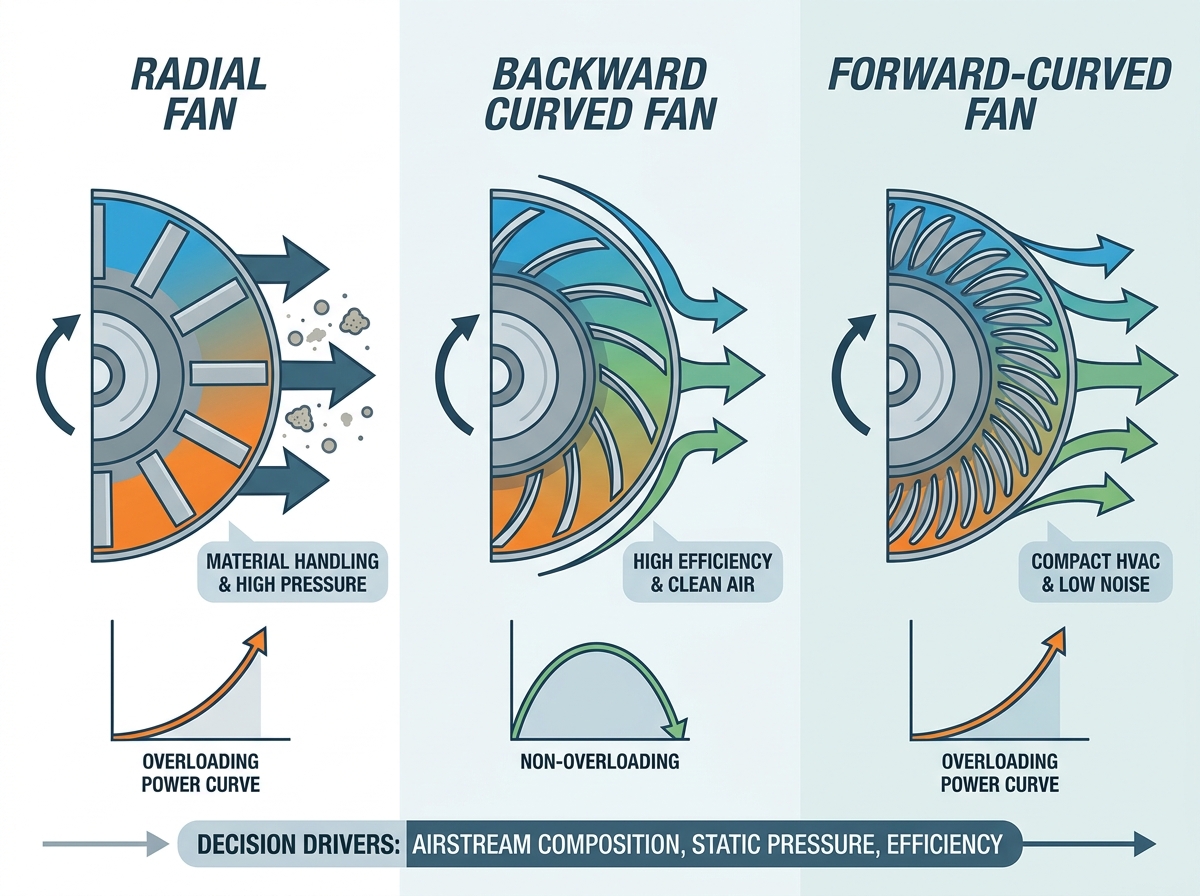
Backward curved fans represent the pinnacle of industrial aerodynamic efficiency. Their blades lean away from the rotation direction prominently. This clever geometry allows air to slide smoothly along the entire blade surface. It facilitates an exceptionally efficient kinetic energy transfer. You get maximum airflow volume for the electrical energy consumed. The design minimizes turbulent air separation on the trailing edge of the blade.
This impeller type operates at higher rotational speeds to generate required pressure. The higher operational speed might seem counterintuitive initially. However, it yields a massive engineering advantage. It features a strictly "non-overloading" horsepower curve. Peak power consumption occurs near peak operating efficiency. The motor will not overload even if system resistance changes unexpectedly. If a duct breaks or a filter fails, the electrical draw remains completely safe.
We specify backward curved fans heavily for forced draft boiler systems. They dominate clean industrial ventilation networks. Variable air volume (VAV) systems rely on their stable performance curves. Any application demanding strictly low lifecycle energy costs benefits heavily from this design. Engineers often select them for massive air handlers where electrical consumption drives the operational budget.
You must watch out for material buildup continually. These fans remain highly susceptible to particulate accumulation on the blade curves. Therefore, they are not suitable for heavy particulate loading applications. Dust buildup destroys the aerodynamic profile quickly. The higher operating speeds also require much heavier, robust construction. Precise dynamic balancing becomes completely mandatory to prevent destructive vibration across the bearing assemblies.
Industry professionals frequently call the Forward-curved Centrifugal Fan a "squirrel cage" fan. It features numerous small, shallow blades curving directly into the direction of rotation. This unique cupping action scoops the air highly efficiently. The wheel usually contains between thirty and sixty individual blades. They sit closely together around the outer circumference of the impeller.
This specific configuration generates maximum airflow at the lowest possible rotational speeds. Lower speeds naturally translate to a significantly lower noise profile. However, it offers much lower overall static pressure capabilities compared to backward curved or radial designs. It moves large volumes of air softly. It cannot push air effectively through massive ductwork resistance. The design prioritizes volume over pressure generation.
We commonly specify them for residential and commercial HVAC networks. They work perfectly in clean-air packaged equipment like fan coil units. Engineers rely on them heavily for environments where physical footprint remains strictly limited. Their incredibly compact size makes them indispensable for tight ceiling spaces. You find them frequently inside rooftop units serving retail or office spaces.
Much like radial fans, they feature a dangerous overloading power curve. If system resistance falls, the motor can draw excessive current rapidly and fail. Furthermore, they remain highly sensitive to dust accumulation. Even minor particulate buildup drastically reduces their scooping efficiency. Dirt unbalances the lightweight wheel very quickly. This unbalance leads to rapid bearing failure and severe mechanical vibration.
Choosing the correct fan requires a highly disciplined evaluation framework. Do not guess based on initial purchase price alone. Use exact engineering metrics to guide your specification process. We look at four distinct variables to determine the safest, most efficient impeller profile.
Airstream composition serves as the absolute dealbreaker metric. For strictly clean air, choose a backward curved fan for maximum efficiency. Alternatively, choose a Forward-curved Centrifugal Fan to save physical space. If handling light dust or moisture, opt for backward inclined models. You can also specify specifically coated backward curved units. For heavy particulates or fibrous materials, a radial fan becomes completely mandatory. It prevents catastrophic buildup and inevitable system failure.
You must balance efficiency against long-term operating costs. Contrast the high initial efficiency of backward curved fans against radial fans. Radial fans carry severe long-term energy penalties in continuous-duty applications. Over five years, the electrical energy savings from a backward curved design usually dwarf the initial equipment cost. Run the math on continuous horsepower draw before deciding.
Evaluate how physical space restrictions affect your choice. Tight mechanical rooms often force tough engineering compromises. You might need to specify a forward-curved fan despite its lower aerodynamic efficiency. Its ability to move high volumes of air at low speeds keeps acoustic signatures manageable. It fits inside small air handler casings easily.
Finally, evaluate system resistance stability constantly. Highlight the safety of the backward curved fan's non-overloading curve. It protects the motor perfectly in systems experiencing fluctuating static pressure. As loading filters clog, resistance changes. Variable dampers alter duct pressure continuously. The non-overloading curve prevents motor burnout during these common operational shifts.
| Fan Type | Efficiency | Power Curve Profile | Airstream Suitability | Primary Advantage |
|---|---|---|---|---|
| Radial | Low | Overloading | Heavy Particulates / High Heat | Maximum structural durability |
| Backward Curved | High | Non-Overloading | Clean Air / Light Fumes | Lowest energy consumption |
| Forward Curved | Medium | Overloading | Strictly Clean Air | Compact physical footprint |
Proper specification goes well beyond simply picking the right blade shape. You must manage complex installation variables. You must communicate effectively with manufacturers. Many well-designed fans fail because engineers ignored the surrounding system dynamics. Follow strict sizing protocols to ensure long-term reliability.
Avoid oversizing radial fan motors unnecessarily. Some engineers apply arbitrary safety factors routinely, leading to massive wasted energy. Utilize exact static pressure calculations instead. Oversized motors run constantly below their optimal load. This destroys electrical power factors across your facility. It also increases initial capital expenditure without providing any tangible operational benefit.
Pairing backward curved fans with Variable Frequency Drives (VFDs) unlocks maximum energy savings. As system demand drops, the VFD slows the fan safely. However, ensure you do not risk aerodynamic stall conditions at exceptionally low speeds. Consult the manufacturer's performance curve closely. Establish safe minimum operating frequencies to prevent damaging surge conditions.
Prepare thoroughly before engaging an application engineer for procurement. Bring the following specific data points to your consultation:
No single fan type operates universally superior across all industrial applications. Selection remains a strict outcome of airstream conditions and system resistance profiles. You must match the impeller geometry strictly to the physical realities of your process. Ignoring these aerodynamic principles guarantees premature equipment failure and massive energy waste.
We highly recommend prioritizing radial fans for harsh material handling scenarios. They offer unmatched durability when moving heavy, abrasive particulates. Conversely, always default to backward curved fans for efficient, clean-air industrial processes. Their non-overloading characteristics provide vital operational safety for your motors.
Take action today by reviewing your current ventilation infrastructure. Encourage your facility team to consult directly with an experienced air movement engineer. Request a technical sizing assessment immediately. Match the exact impeller profile to your facility's unique operating needs. Proper specification prevents costly unplanned downtime and ensures optimal airflow delivery.
A: Only if the airstream has been heavily filtered or is completely free of heavy particulates. Otherwise, the backward curved wheel will quickly accumulate heavy material. This buildup causes severe unbalance, leading to rapid structural failure and safety hazards.
A: Its maximum horsepower requirement occurs well within its normal operating range. If system pressure drops abruptly—for example, if a main duct opens—the motor will not draw excessive current. This built-in aerodynamic limit prevents catastrophic motor burnout.
A: It is the wrong choice in high-pressure industrial systems or heavily dusty environments. Because it features an overloading power curve, it is extremely dangerous in applications where exact system resistance remains unknown or fluctuates wildly.
A: Yes. To achieve the exact same airflow and pressure metrics, backward curved impellers must operate at a significantly higher RPM. This increased rotational speed requires incredibly precise dynamic balancing and highly robust bearing selection to ensure safe operation.


