


Views: 0 Author: Site Editor Publish Time: 2026-06-11 Origin: Site


Specifying industrial ventilation carries incredibly high stakes. Choose the wrong equipment, and you risk severe system inefficiency, catastrophic motor burnout, or excessive noise levels. These failures disrupt critical operations and demand constant troubleshooting. Fortunately, the backward curved centrifugal fan serves as the reliable gold standard for demanding airflow applications. Engineers rely on it heavily for high-efficiency, variable-resistance environments. We will explore exactly how this equipment operates and why it dominates modern HVAC and industrial systems. This guide defines its core mechanics and compares it against common alternatives. You will gain a practical framework for evaluating whether this specific design fits your unique airflow and static pressure requirements. By the end, you will understand how to optimize your system performance and avoid costly specification errors.
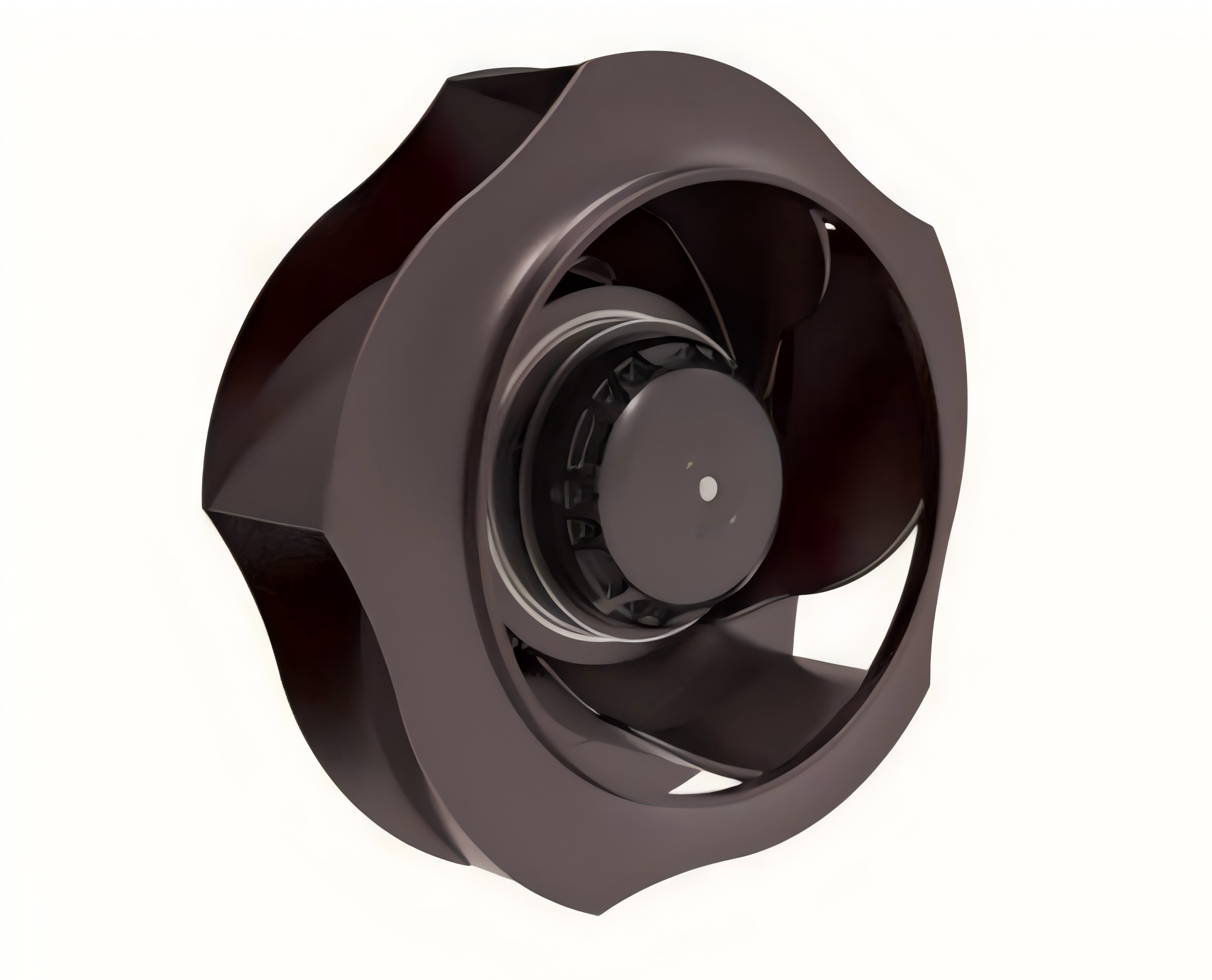
Design Profile: Blades curve away from the direction of rotation, generating airflow through kinetic energy conversion.
Core Advantage: Features a "non-overloading" power curve, protecting motors from burning out if system pressure unexpectedly drops.
Primary Application: Optimal for high-pressure, clean-air environments demanding high energy efficiency (frequently paired with EC motors).
Trade-off: Requires a larger physical footprint and operates at higher speeds compared to forward-curved alternatives.
Understanding the internal mechanics helps you appreciate the performance limits of this equipment. The impeller acts as the functional heart of the system. It handles airflow in a highly specific, controlled manner to maximize efficiency.
Air enters the assembly axially through a precisely engineered inlet cone. The rotating impeller then captures this incoming air. Blades immediately redirect the air 90 degrees, discharging it radially outward. Unlike standard designs, these specific blades lean away from the direction of rotation. This backward-inclined orientation dictates how the air moves across the blade surface. It prevents sudden air acceleration and minimizes disruptive turbulence. Smooth airflow across the metal surface reduces aerodynamic drag. The design allows the impeller to spin faster while maintaining a stable flow profile.
Ventilation systems rely on static pressure to push air through ductwork and filters. This fan design excels at generating high static pressure efficiently. As the impeller spins, it imparts massive kinetic energy to the air. The air leaves the blade tips at a high velocity. The system must convert this velocity pressure into usable static pressure. It achieves this conversion within the surrounding housing or an open plenum enclosure. The gradual expansion of air reduces its speed and simultaneously increases its static pressure. This aerodynamic conversion process wastes very little energy. It produces a highly stable pressure column suitable for complex duct networks.
Modern applications require tight motor integration. Engineers frequently utilize direct-drive systems to eliminate the energy losses associated with belts and pulleys. They often pair these impellers with Electronically Commutated (EC) motors. EC motors operate using onboard microprocessors to optimize magnetic fields dynamically. They match the inherent aerodynamic efficiency of the backward curved design perfectly. You gain precise speed control without sacrificing torque or wasting electricity. This direct-drive EC setup minimizes maintenance requirements because it removes wear parts from the drive train.
You must understand the performance differences between fan categories to make an informed selection. Forward curved and backward curved designs serve entirely different operational needs.
Power consumption patterns define the reliability of your ventilation setup. Backward curved fans feature a non-overloading power curve. As airflow increases against dropping resistance, the power requirement reaches a peak and then declines. You can precisely match your motor size to this peak without fear. If ductwork breaks or filters fail, the motor will not draw excess current. It protects itself automatically.
Forward curved models behave differently. They feature an overloading power curve. Power consumption continuously increases as airflow increases. If system resistance drops unexpectedly, the fan moves massive air volumes and draws excessive current. You must oversize the motor heavily to prevent catastrophic burnout under these fault conditions.
Energy efficiency separates these two technologies distinctly. Backward curved models convert mechanical energy into aerodynamic work exceptionally well. They typically yield 70% to 85% peak efficiency during standard operation. Their smooth blade design minimizes internal air separation and vortex shedding. This high efficiency translates directly into lower power consumption.
Forward curved models prioritize air volume over energy conversion. They typically operate at 55% to 65% peak efficiency. The forward-facing scoop blades create turbulent air pockets. This turbulence wastes kinetic energy as heat and noise, requiring more electrical input to achieve the same work.
Physical constraints often dictate equipment selection. Forward curved fans pack a dense number of small blades into a compact wheel. They move large volumes of air at very low rotational speeds. This makes them highly compact. They excel in tight spaces where overall efficiency remains a secondary concern.
Backward curved designs require fewer, larger blades. They rely on higher rotational speeds to achieve their performance. They demand a significantly larger physical footprint for the same airflow volume. You must allocate adequate cabinet space in your air handling units to accommodate them.
Table 1: Operational Comparison of Centrifugal Fan Types | ||
Feature | Backward Curved | Forward Curved |
|---|---|---|
Blade Orientation | Leans away from rotation | Curves toward rotation |
Power Curve | Non-overloading (peaks and drops) | Overloading (rises continuously) |
Peak Efficiency | 70% - 85% | 55% - 65% |
Rotational Speed | High | Low |
Physical Footprint | Larger | Compact |
Selecting the correct blower requires mapping the equipment capabilities directly to your environmental conditions. You must evaluate three critical dimensions before finalizing your specification.
You must assess suitability based on the actual static pressure curve of your network. Backward curved units excel in environments characterized by fluctuating or consistently high resistance. Consider HEPA filtration systems in cleanrooms. Filters load up with microscopic dust over time. This particulate accumulation increases system resistance gradually. A backward curved impeller handles this pressure fluctuation effortlessly. It pushes air through the restricting filter media without a severe drop in cubic feet per minute (CFM). They also perform exceptionally well in server rack cooling, where internal component layouts create dense, highly restrictive airflow paths.
Airstream cleanliness dictates impeller survivability. Manufacturers design these specific impellers primarily for clean air or extremely light dust applications. The smooth, backward-leaning blades rely on pristine aerodynamic profiles to maintain efficiency.
You must avoid using them in heavy material handling applications. Sticky airborne grease, heavy sawdust, or industrial particulates will adhere to the back side of the blades. This buildup destroys the aerodynamic profile. It also causes severe weight imbalances. An imbalanced wheel spinning at high speeds will quickly destroy the motor bearings. For heavy particulate environments, you must pivot to radial blade fans, structurally designed to self-clean and withstand impacts.
Noise generation requires careful consideration during the design phase. Backward curved models operate at significantly higher tip speeds than their forward curved counterparts. High rotational velocity shears the air rapidly. This action often results in higher-frequency acoustic emissions. High-frequency noise travels easily through unlined ductwork. Fortunately, engineers can attenuate high-frequency noise predictably.
Consider these standard acoustic attenuation strategies when implementing this equipment:
Install specialized sound attenuators directly in the discharge ductwork path.
Mount the fan assembly on engineered vibration isolation springs or rubber pads.
Enclose the entire air handling unit inside an insulated, acoustically rated cabinet.
Utilize flexible canvas connectors between the blower discharge and rigid metal ducts.
Executing a design smoothly requires understanding the practical realities of installation and long-term operation. You must balance upfront decisions with continuous operational requirements.
Engineers must justify their equipment selections carefully. Backward curved units often carry a higher initial price tag. This premium increases noticeably when you specify integrated EC motors. However, their superior aerodynamic efficiency aligns perfectly with modern energy compliance mandates. Facilities face increasingly stringent regulations regarding power consumption. Directives like the European ErP framework and various ASHRAE standards demand strict minimum efficiency thresholds for ventilation equipment. Specifying this fan type ensures compliance and significantly reduces ongoing monthly power consumption. The energy saved during continuous operation offsets the initial capital expenditure rapidly.
HVAC systems rarely operate at maximum capacity constantly. They require dynamic adjustments. This fan design accommodates variable speed control beautifully. When paired with Variable Frequency Drives (VFDs) or EC motors, you can reduce the rotational speed to match exact airflow demands. Crucially, the impeller maintains a high percentage of its aerodynamic efficiency even at reduced speeds. This ease of system balancing allows facility managers to implement demand-control ventilation. They can ramp the airflow up or down seamlessly without suffering the massive efficiency penalties common in other fan designs.
Physical integration impacts overall performance. You must choose between housed and unhoused configurations. Traditional setups utilize a scroll housing. The scroll captures the air leaving the impeller and funnels it into a single discharge duct. This maximizes targeted static pressure.
Alternatively, backward curved impellers perform exceptionally well in unhoused configurations, commonly known as plug fans or plenum fans. In this setup, the impeller sits openly inside a large cabinet or air handling unit. It pressurizes the entire internal volume of the cabinet. This allows air to discharge in multiple directions simultaneously, distributing airflow efficiently across large cooling coils or filter banks without requiring restrictive sheet metal scrolls.
Deciding whether to implement this specific technology requires a clear, logical framework. Use the following criteria to finalize your engineering strategy.
The application demands high, continuous energy efficiency to meet regulatory standards.
The system operates under high or fluctuating static pressure (e.g., dense filters).
The airstream consists of clean air or only lightly contaminated air.
The operational strategy requires frequent variable speed control and system balancing.
The budget prioritizes long-term operational stability over the absolute lowest initial purchase price.
Space is severely restricted, requiring maximum airflow from the smallest possible cabinet (consider forward curved).
The airstream contains heavy particulates, industrial waste, or sticky grease (consider radial blades).
The application requires moving massive volumes of air at near-zero static pressure, such as warehouse wall exhaust (consider axial fans).
Decision Chart: Selecting the Right Fan Architecture | |
Primary System Requirement | Recommended Fan Technology |
|---|---|
High static pressure, high efficiency, clean air | Backward Curved Centrifugal |
Tight space constraints, low pressure, clean air | Forward Curved Centrifugal |
Heavy dust, material handling, severe conditions | Radial Blade Centrifugal |
Massive airflow volume, zero/low pressure | Propeller / Axial Fan |
If the backward curved design fits your project, you must formalize your specifications. First, define the precise required airflow volume (CFM) for the space. Next, calculate the total system static pressure by adding up the resistance of all ducts, coils, dampers, and filters. Finally, consult verified manufacturer performance curves. You will use these curves to select the exact impeller diameter, rotational speed, and motor pairing that hits your required operational sweet spot.
Specifying a backward curved centrifugal fan represents a strategic engineering decision. It prioritizes long-term motor reliability, superior static pressure handling, and aggressive energy efficiency. While they require a larger installation footprint and demand specific acoustic treatments, their operational benefits far outweigh these minor physical constraints in demanding industrial environments. They protect themselves from overloading, making them resilient against unexpected system pressure drops. We encourage engineers and purchasing teams to evaluate their specific airflow requirements rigorously. Always rely on verified manufacturer fan curves to confirm performance parameters rather than leaning on broad category assumptions. To ensure optimal system performance, contact a technical sales team today. Provide them with your specific system parameters, including target CFM and calculated static pressure, for customized sizing and expert selection assistance.
A: The power requirement reaches a maximum point on the performance curve and then decreases as airflow increases. This means the motor will not draw excess current even if all system resistance is removed, preventing motor burnout.
A: Yes. They are frequently used as "plug fans" or "plenum fans" in AHUs (Air Handling Units), pressurizing the entire cabinet to distribute air efficiently without a dedicated scroll housing.
A: Generally, yes, because they run at higher rotational speeds to achieve the same airflow. However, the noise is highly predictable and manageable with standard acoustic treatments.
A: EC (Electronically Commutated) motors provide onboard speed control and operate at much higher efficiencies across the speed range, compounding the aerodynamic efficiency of the backward curved impeller.


